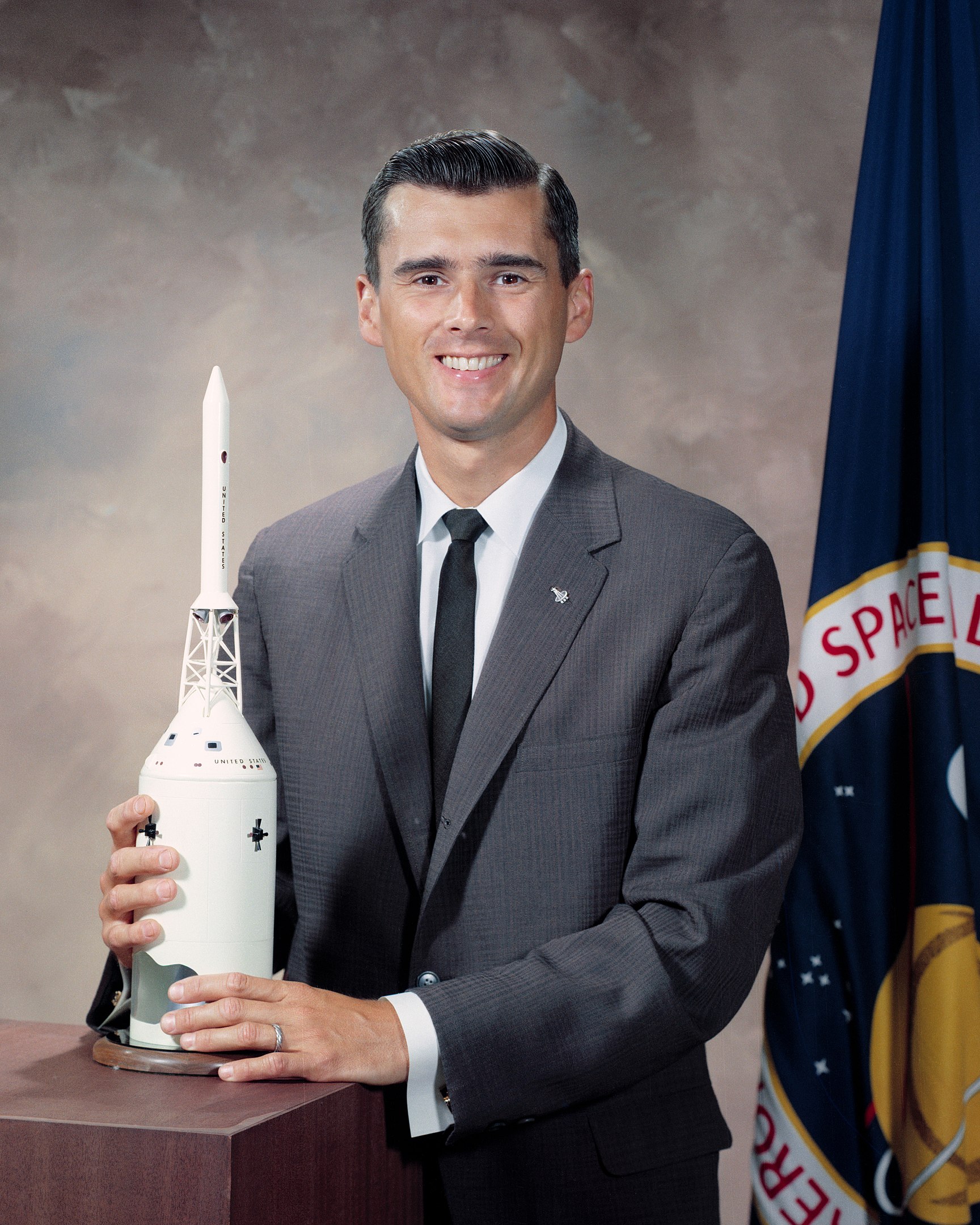
Roger B. Chaffee
American - (NASA)
Lost In Training
Date of Birth: Feb. 15, 1935
Date of Death: Jan. 27, 1967
Roger Bruce Chaffee was an American naval officer, aviator, and aeronautical engineer who was a NASA astronaut in the Apollo program. Along with thirteen other pilots, Chaffee was selected to be an astronaut as part of NASA Astronaut Group 3 in 1963. He served as capsule communicator (CAPCOM) for the Gemini 3 and Gemini 4 missions and received his first spaceflight assignment in 1966 as the third-ranking pilot on Apollo 1. In 1967, he died in a fire along with fellow astronauts Virgil "Gus" Grissom and Ed White during a pre-launch test for the mission at what was then the Cape Kennedy Air Force Station Launch Complex 34, Florida. He was posthumously awarded the Congressional Space Medal of Honor and a second Air Medal.
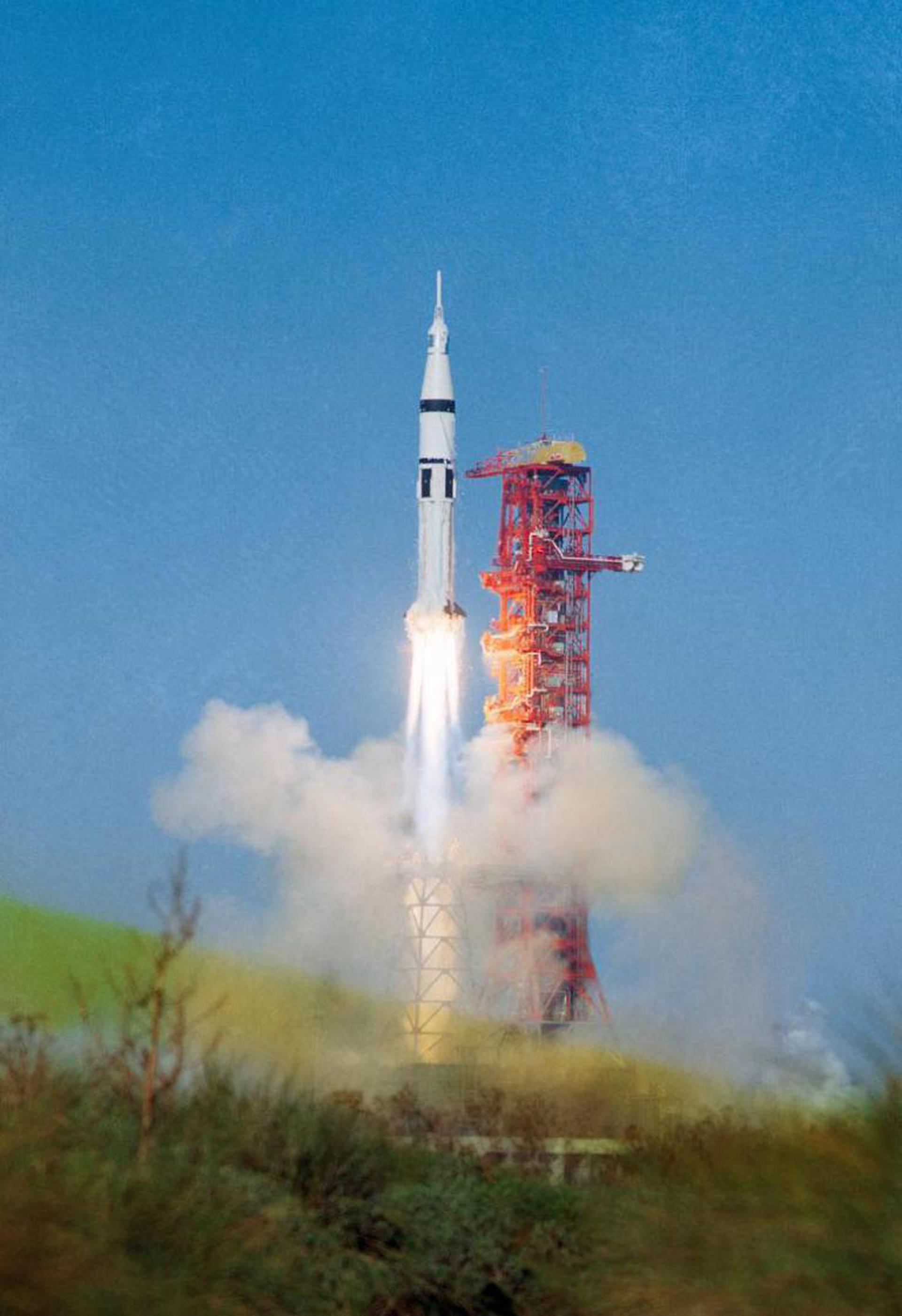
Saturn IB | Apollo 1 (Failure before launch)
National Aeronautics and Space Administration | United States of AmericaCape Canaveral SFS, FL, USA
Jan. 27, 1967, 11:31 p.m.
Status: Failure
Mission:
Apollo 1, initially designated AS-204, was the first crewed mission of the United States Apollo program, the undertaking to land the first man on the Moon. It was planned to launch on February 21, 1967, as the first low Earth orbital test of the Apollo command and service module. The mission never flew; a cabin fire during a launch rehearsal test at Cape Kennedy Air Force Station Launch Complex 34 on January 27 killed all three crew members—Command Pilot Gus Grissom, Senior Pilot Ed White, and Pilot Roger B. Chaffee—and destroyed the command module (CM). The name Apollo 1, chosen by the crew, was made official by NASA in their honor after the fire.
Low Earth OrbitThe National Aeronautics and Space Administration is an independent agency of the executive branch of the United States federal government responsible for the civilian space program, as well as aeronautics and aerospace research. NASA have many launch facilities but most are inactive. The most commonly used pad will be LC-39B at Kennedy Space Center in Florida.
Soyuz 2.1b/Volga
Kosmos (Unknown Payload)
Unknown Pad - Plesetsk Cosmodrome, Russian FederationUnknown satellite(s) for the Russian military.
Falcon 9
Starlink Group 17-27
Space Launch Complex 4E - Vandenberg SFB, CA, USAA batch of 25 satellites for the Starlink mega-constellation - SpaceX's project for space-based Internet communication system.
Falcon 9
Starlink Group 10-24
Space Launch Complex 40 - Cape Canaveral SFS, FL, USAA batch of 29 satellites for the Starlink mega-constellation - SpaceX's project for space-based Internet communication system.
Kinetica 1
8 x Jilin-1
Launch Area 130 - Jiuquan Satellite Launch Center, People's Republic of China8 Earth observation satellites for the Jilin-1 commercial Earth observation satellites constellation: * High Resolution-07A 02-04 * High Resoluti…
Falcon 9
Cygnus CRS-2 NG-24 (S.S. Steven R. Nagel)
Space Launch Complex 40 - Cape Canaveral SFS, FL, USAThis is the 24th flight of the Orbital ATK's uncrewed resupply spacecraft Cygnus and its 23rd flight to the International Space Station under the Com…

