Upcoming Spaceflight Launches
Filter by Agency, Locations or Vehicles
Show All Launches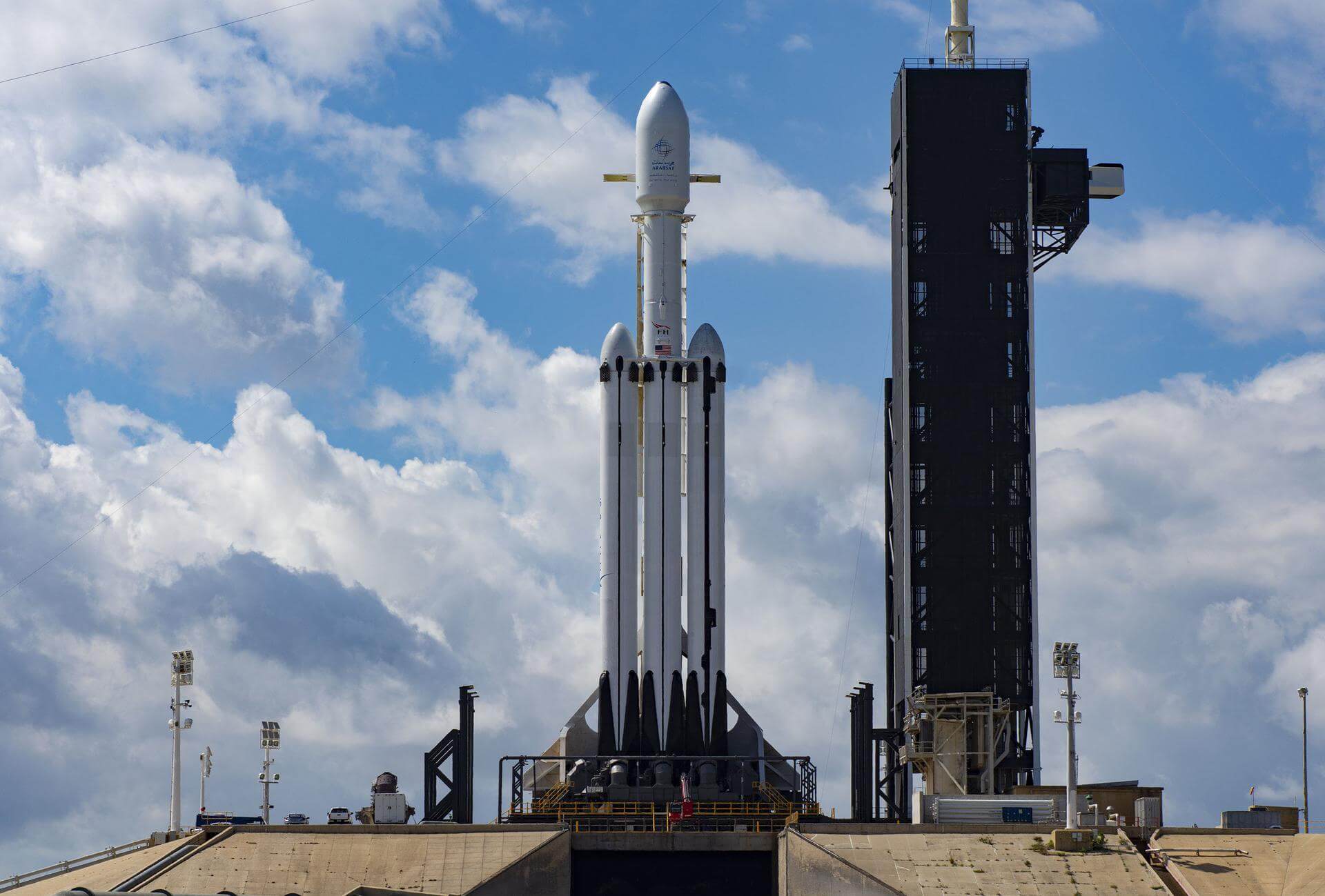
Falcon Heavy | Gateway PPE & HALO
SpaceX | United States of AmericaKennedy Space Center, FL, USA
TBD December, 2027
Status: To Be Determined
Mission:
The Power and Propulsion Element (PPE) and Habitation and Logistics Outpost (HALO) are the foundational elements of NASA's lunar-orbiting space station "Gateway". The PPE is a 60-kilowatt class solar electric propulsion spacecraft that also will provide power, high-speed communications, attitude control and the capability to move the Gateway to different lunar orbits. The HALO is the pressurized living quarters where astronauts who visit the Gateway, often on their way to the Moon, will work. It will provide command and control and serve as the docking hub for the outpost. HALO will support science investigations, distribute power, provide communications for visiting vehicles and lunar surface expeditions, and supplement the life support systems aboard Orion, NASA’s spacecraft that will deliver Artemis astronauts to the Gateway.
Lunar Orbit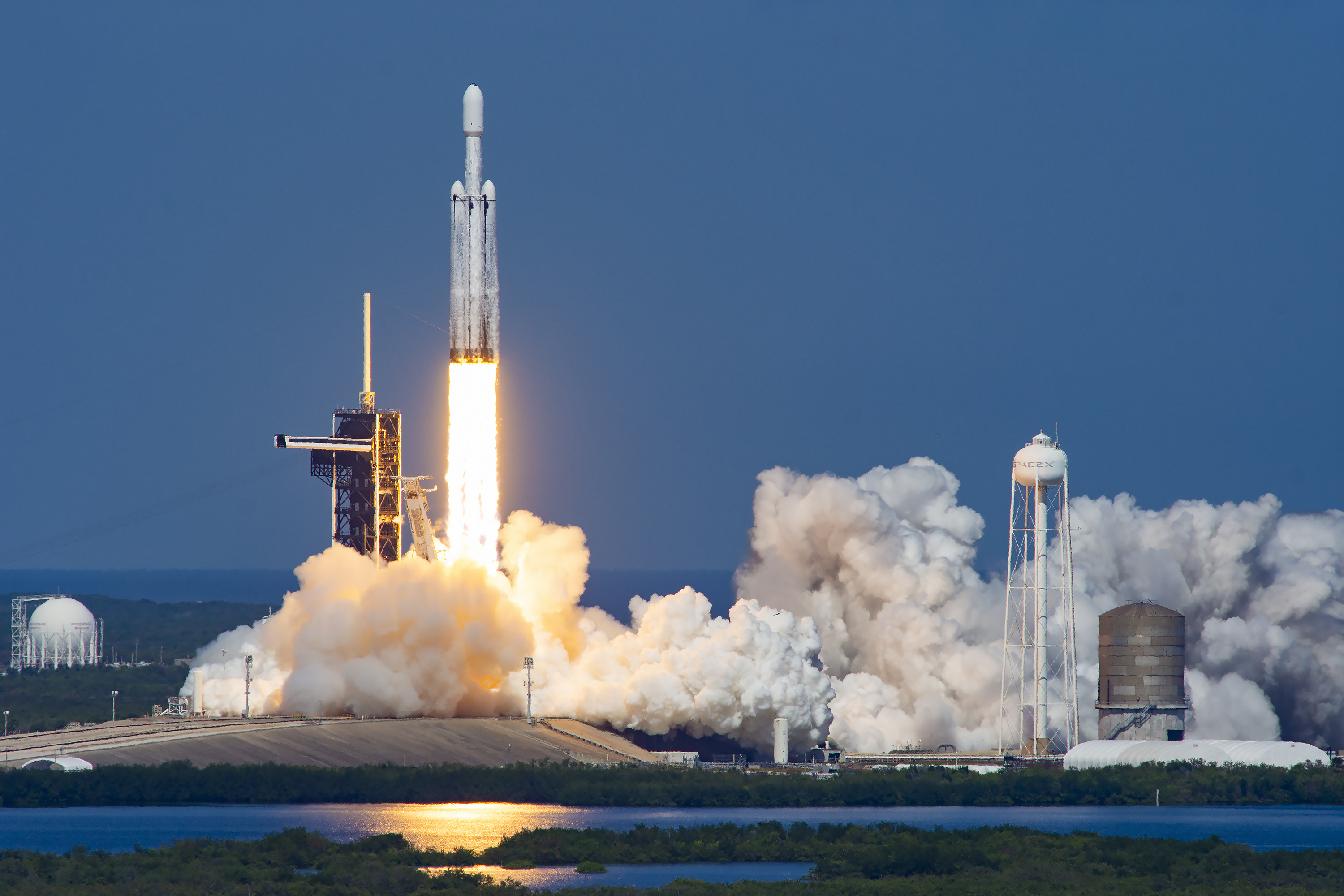
Falcon Heavy | Dragonfly
SpaceX | United States of AmericaKennedy Space Center, FL, USA
TBD July, 2028
Status: To Be Determined
Mission:
Dragonfly is NASA's 4th New Frontiers program mission that will send a robotic rotorcraft to fly within the atmosphere of Saturn's moon Titan to sample materials and determine surface composition in different geologic settings, advancing humanity's search for the building blocks of life. The craft is a large quadcopter with double rotors with mass of about 875 kg, featuring rotors of 1.35 m in diameter. It can fly through several kilometers within an hour and will perform 1 flight per Titan day (~16 Earth days). During the planned 3.3-year mission, Dragonfly is expected to cover distance up to several hundred km. Dragonfly will use a Multi-Mission Radioisotope Thermoelectric Generator (MMRTG) to power its instruments. The planned science instrument suite is: * DragonCam: Camera Suite * DrACO: Drill for Acquisition of Complex Organics * DraMS: Mass Spectrometer * DraGNS: Gamma-ray and Neutron Spectrometer * DraGMet: Geophysics and Meteorology
Heliocentric N/AFalcon Heavy | USSF-186
SpaceX | United States of AmericaKennedy Space Center, FL, USA
TBD December, 2029
Falcon Heavy | USSF-174
SpaceX | United States of AmericaKennedy Space Center, FL, USA
TBD December, 2029
Falcon Heavy | NROL-97
SpaceX | United States of AmericaKennedy Space Center, FL, USA
TBD December, 2029
Falcon Heavy | GPS IIIF SV03 (USSF-15)
SpaceX | United States of AmericaKennedy Space Center, FL, USA
TBD December, 2029
Falcon 9
Starlink Group 6-96
Space Launch Complex 40 - Cape Canaveral SFS, FL, USAA batch of 29 satellites for the Starlink mega-constellation - SpaceX's project for space-based Internet communication system.
Falcon 9
Starlink Group 6-88
Space Launch Complex 40 - Cape Canaveral SFS, FL, USAA batch of 29 satellites for the Starlink mega-constellation - SpaceX's project for space-based Internet communication system.
Falcon 9
CSG-3
Space Launch Complex 4E - Vandenberg SFB, CA, USACSG-3 is an Earth observation satellite for the Italian Space Agency, part of a reconnaissance constellation using synthetic aperture radars operatin…
Long March 7A
Shijian 29 A-B
201 - Wenchang Space Launch Site, People's Republic of China2 satellites officially described as for "demonstration of new technologies for spatial targets detection" purposes.
Long March 4B
Tianhui 7
Launch Area 94 (SLS-2 / 603) - Jiuquan Satellite Launch Center, People's Republic of ChinaA satellite officially described as for cartography purposes, details TBD.
Soyuz 2.1b/Fregat-M
AIST-2T 01 & 02
Cosmodrome Site 1S - Vostochny Cosmodrome, Siberia, Russian FederationA pair of Russian optical Earth observation satellites built by the Progress Rocket Space Centre for obtaining stereo images of the Earth's surface, …
Long March 3B/E
Fengyun-4C
Launch Complex 2 (LC-2) - Xichang Satellite Launch Center, People's Republic of ChinaChina's geostationary meteorological satellite program FY-4 (Feng Yun 4) is the second generation of chinese geostationary meteorological satellites.
Long March 8A
SatNet LEO Group 17
Commercial LC-1 - Wenchang Space Launch Site, People's Republic of ChinaA batch of 9 Low Earth Orbit communication satellites for the Chinese state owned SatNet constellation operated by the China Satellite Network Group.…
Soyuz 2.1a
Obzor-R No.1
43/4 (43R) - Plesetsk Cosmodrome, Russian FederationNote: Assignment of payloads to this launch is uncertain. The Russian Obzor-R satellite is a planned X-band radar earth observation satellite desi…
LVM-3 (GSLV Mk III)
BlueBird Block 2 #1
Satish Dhawan Space Centre Second Launch Pad - Satish Dhawan Space Centre, IndiaAST SpaceMobile’s Block 2 BlueBird satellites are designed to deliver up to 10 times the bandwidth capacity of the BlueBird Block 1 satellites, requi…

