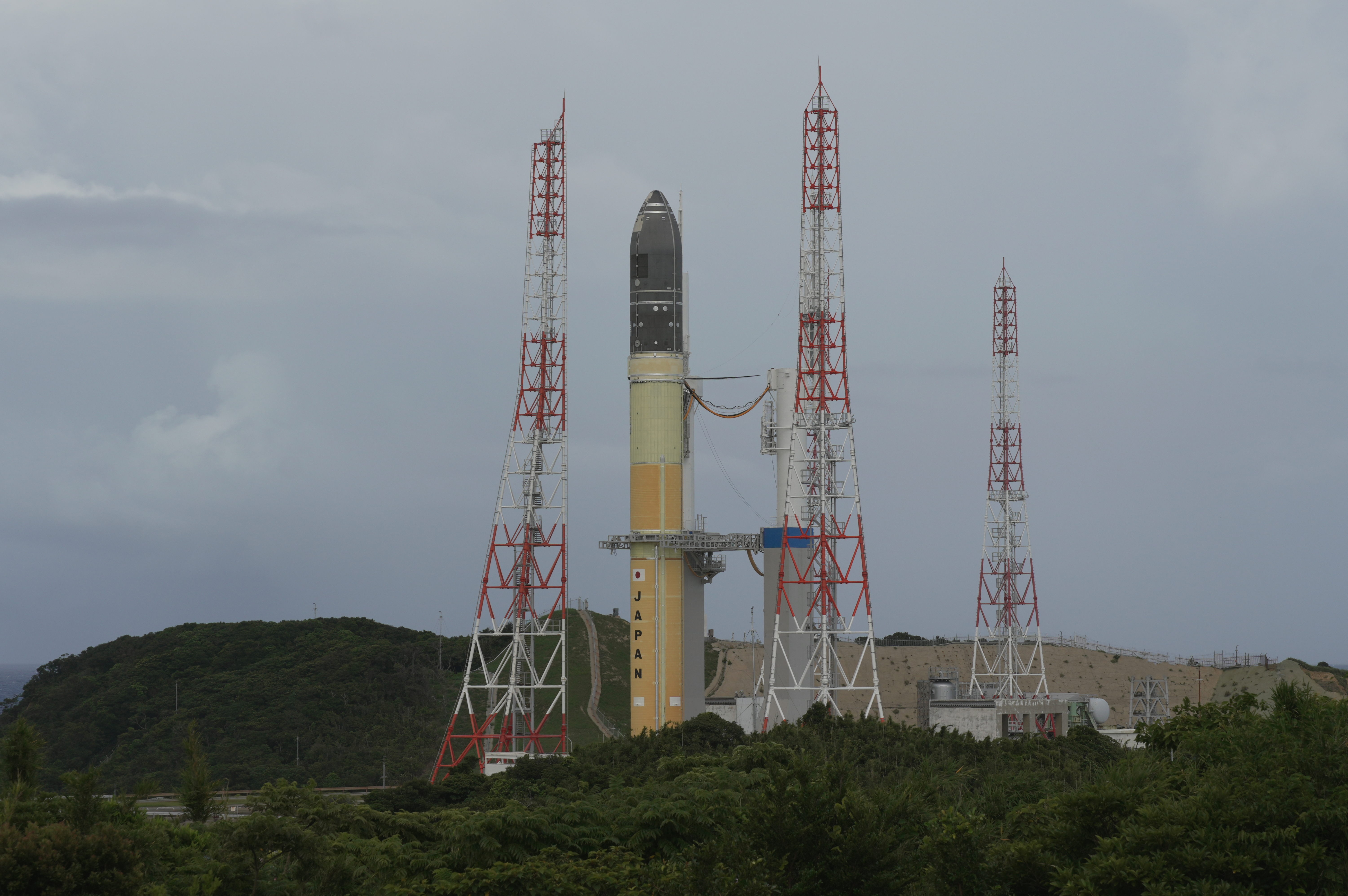
H3-30
ActiveMitsubishi Heavy Industries (MHI)
None
Description
The H3 Launch Vehicle is an expendable launch system in development in Japan. H3 rockets are liquid-propellant rockets with strap-on solid rocket boosters and are planned to be launched from the Tanegashima Space Center in Japan. Mitsubishi and the JAXA have been responsible for the design, manufacture, and operation of the H3.
Specifications
-
Stages
2 -
Length
63.0 m -
Diameter
5.27 m -
Fairing Diameter
5.27 m -
Launch Mass
274.0 T -
Thrust
4413.0 kN
Family
-
Name
H3-30 -
Family
― -
Variant
30 -
Alias
― -
Full Name
H3-30
Payload Capacity
-
Launch Cost
$50000000 -
Low Earth Orbit
― -
Geostationary Transfer
Orbit
2300.0 kg -
Direct Geostationary
― -
Sun-Synchronous Capacity
4000.0 kg
Mitsubishi Heavy Industries
Commercial
President: Seiji Izumisawa
MHI 1884Mitsubishi Heavy Industries, Ltd. is a Japanese multinational engineering, electrical equipment and electronics company headquartered in Tokyo, Japan. MHI is one of the core companies of the Mitsubishi Group. MHI's products include aerospace components, air conditioners, aircraft, automotive components, forklift trucks, hydraulic equipment, machine tools, missiles, power generation equipment, printing machines, ships and space launch vehicles. Through its defense-related activities, it is the world's 23rd-largest defense contractor measured by 2011 defense revenues and the largest based in Japan.
Upcoming Spaceflights
H3-30 | H3-30 Test Flight
Mitsubishi Heavy Industries | JapanTanegashima Space Center, Japan
TBD June, 2026
Status: To Be Determined
Mission:
Test flight of the H3-30 variant of the H3 launch vehicle with 3 LE-9 engines in the first stage and no SRBs. The flight will carry a dummy main payload (Vehicle Evaluation Payload 5, VEP-5) and several hitchhiking small satellites: * PETREL * STARS-X * BRO-19 * VERTECS * HORN-L/R
Sun-Synchronous OrbitFlight Record
No spaceflights found for .
Falcon 9
Cygnus CRS-2 NG-24 (S.S. Steven R. Nagel)
Space Launch Complex 40 - Cape Canaveral SFS, FL, USAThis is the 24th flight of the Orbital ATK's uncrewed resupply spacecraft Cygnus and its 23rd flight to the International Space Station under the Com…
Smart Dragon 3
SatNet test satellite
South China Sea (launch location 3) - Haiyang Oriental SpaceportOfficially described as "Satellite-Internet Technology Demonstration Satellite". Probable 1 (?) test satellite for the Chinese state-owned LEO commun…
Falcon 9
Starlink Group 17-21
Space Launch Complex 4E - Vandenberg SFB, CA, USAA batch of 25 satellites for the Starlink mega-constellation - SpaceX's project for space-based Internet communication system.
Long March 6A
SatNet LEO Group 21
Launch Complex 9A - Taiyuan Satellite Launch Center, People's Republic of ChinaA batch of 5 Low Earth Orbit communication satellites for the Chinese state owned SatNet constellation operated by the China Satellite Network Group.…
Long March 8
SpaceSail Polar Group 07
Commercial LC-1 - Wenchang Space Launch Site, People's Republic of China18 Low Earth Orbit communication satellites with Ku, Q and V band payloads for the G60 constellation operated by Shanghai Spacesail Technologies with…

