SLS Block 1 | Artemis II
Launch Successful
L - -- : -- : -- : --
Launch Window
April 1, 2026, 10:24 p.m. - April 2, 2026, 12:24 a.m.


April 1, 2026, 10:24 p.m. - April 2, 2026, 12:24 a.m.
Artemis II is the first crewed mission as part of the Artemis program. Artemis II will send a crew of 4 - 3 Americans and 1 Canadian around the moon and return them back to Earth. The mission will test the core systems of NASA's Orion spacecraft including the critical life support system, among other systems which could not be tested during Artemis I due to the lack of crew onboard.
Launch trajectory and telemetry simulations provided by Flight Club - a rocket launch simulator and orbital trajectory visualiser for all things space!

Launch success with Orion separation.
Liftoff.
New T-0.
Extending hold at T-10 minutes.
Updated launch weather.
The Space Launch System (SLS) is an American Space Shuttle-derived heavy expendable launch vehicle. It is part of NASA's deep space exploration plans including as the main launch vehicle of the Artemis program. SLS follows the cancellation of the Constellation program, and is to replace the retired Space Shuttle.
See DetailsOrion spacecraft used for Artemis 2.
Orion Details
Date of
Birth: Nov. 11, 1975
Age: 50
Date of
Birth: April 30, 1976
Age: 49
Date of
Birth: Jan. 27, 1976
Age: 50
Date of
Birth: Jan. 29, 1979
Age: 47
The National Aeronautics and Space Administration is an independent agency of the executive branch of the United States federal government responsible for the civilian space program, as well as aeronautics and aerospace research. NASA have many launch facilities but most are inactive. The most commonly used pad will be LC-39B at Kennedy Space Center in Florida.
INFO WIKI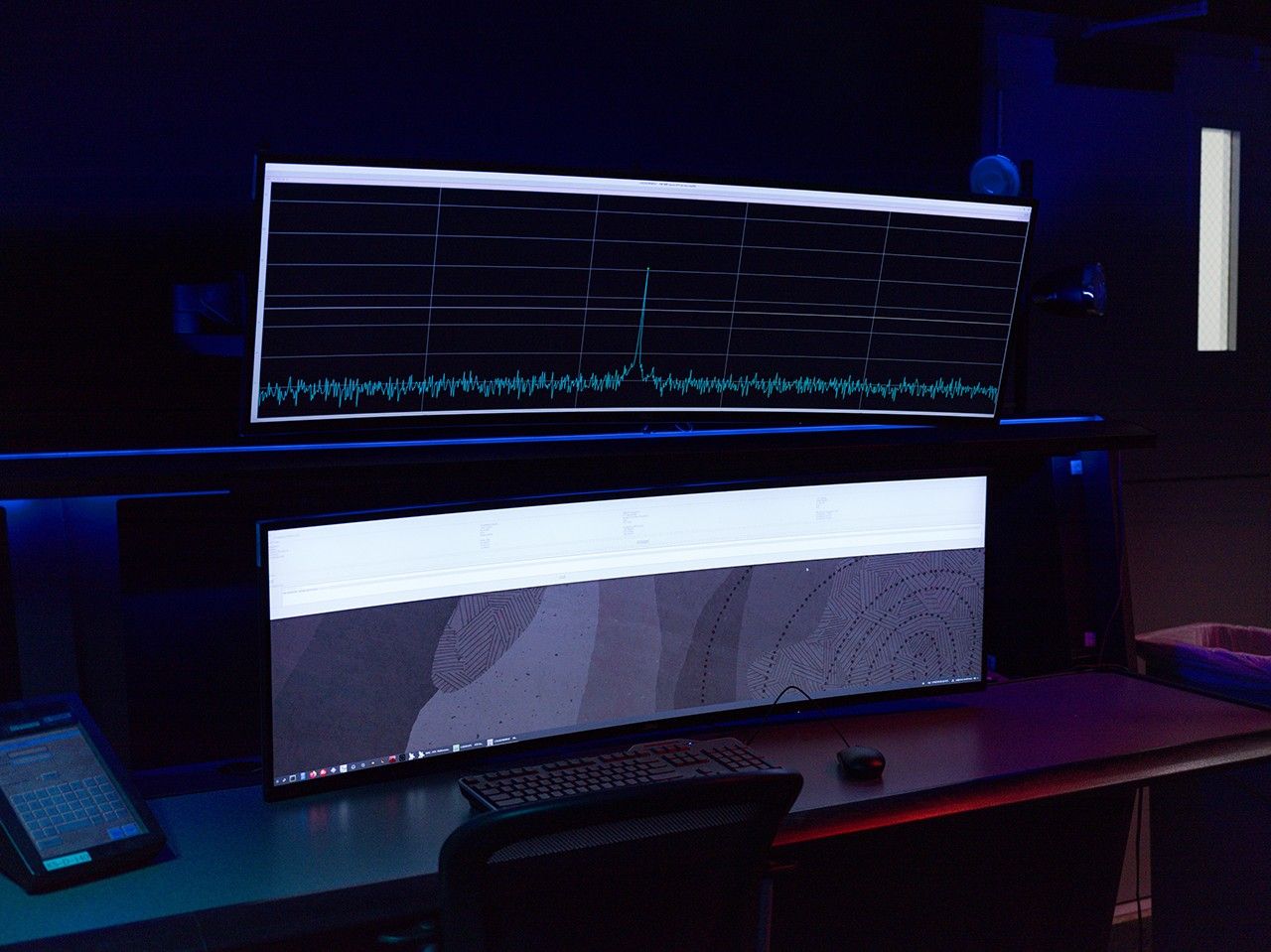
Description The acquisition of the radio frequency signal from the Artemis II crewed mission to the Moon by NASA’s Deep Space Network (DSN) is indicated by the peak in the data signal shown on the top computer screen. Soon after the missi…
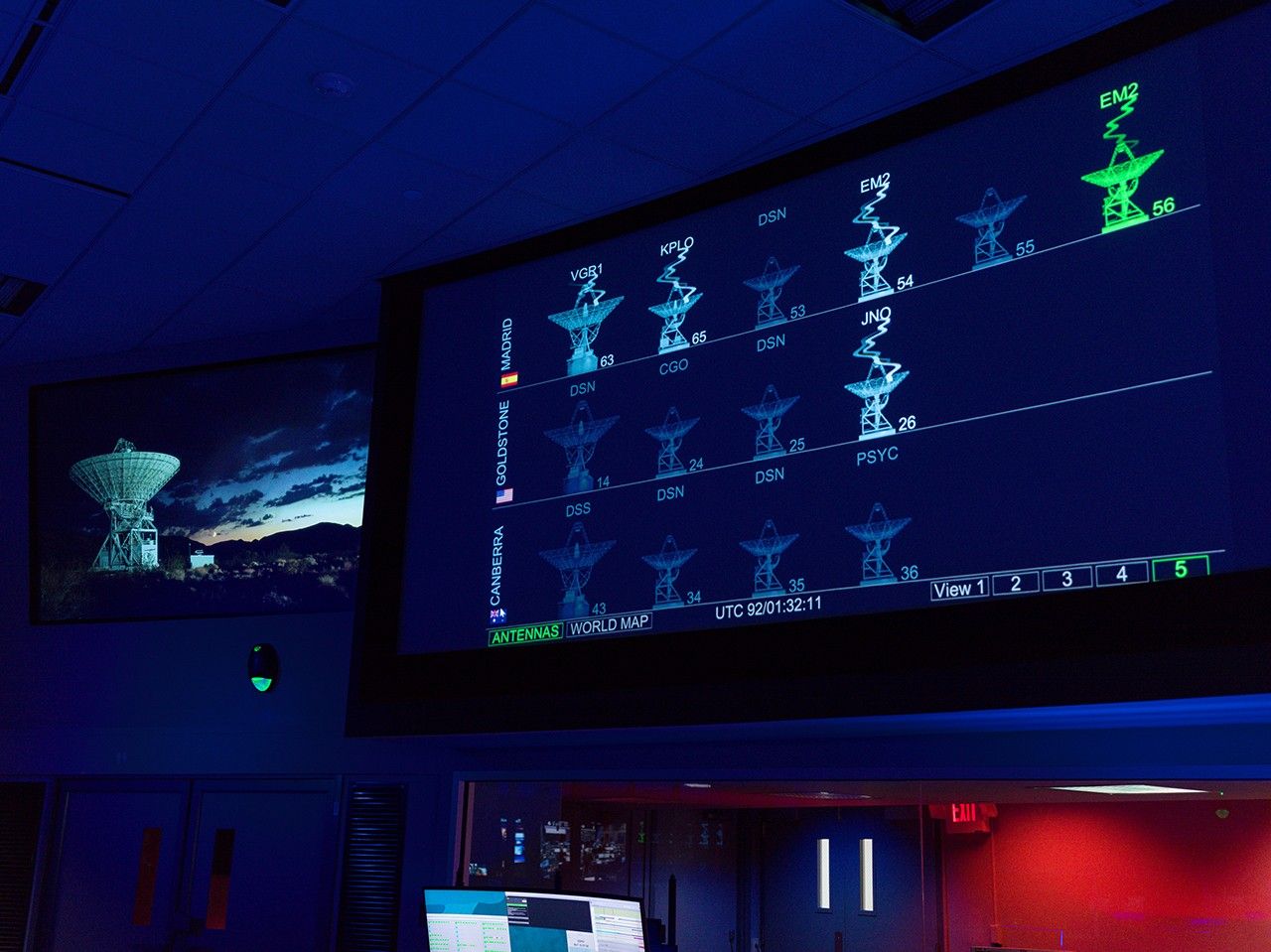
Description A graphical representation of the Deep Space Network’s radio frequency antennas indicate signal acquisition from NASA’s Artemis II mission to the Moon on April 1, 2026, inside the Space Flight Operations Facility at NASA’s Jet …
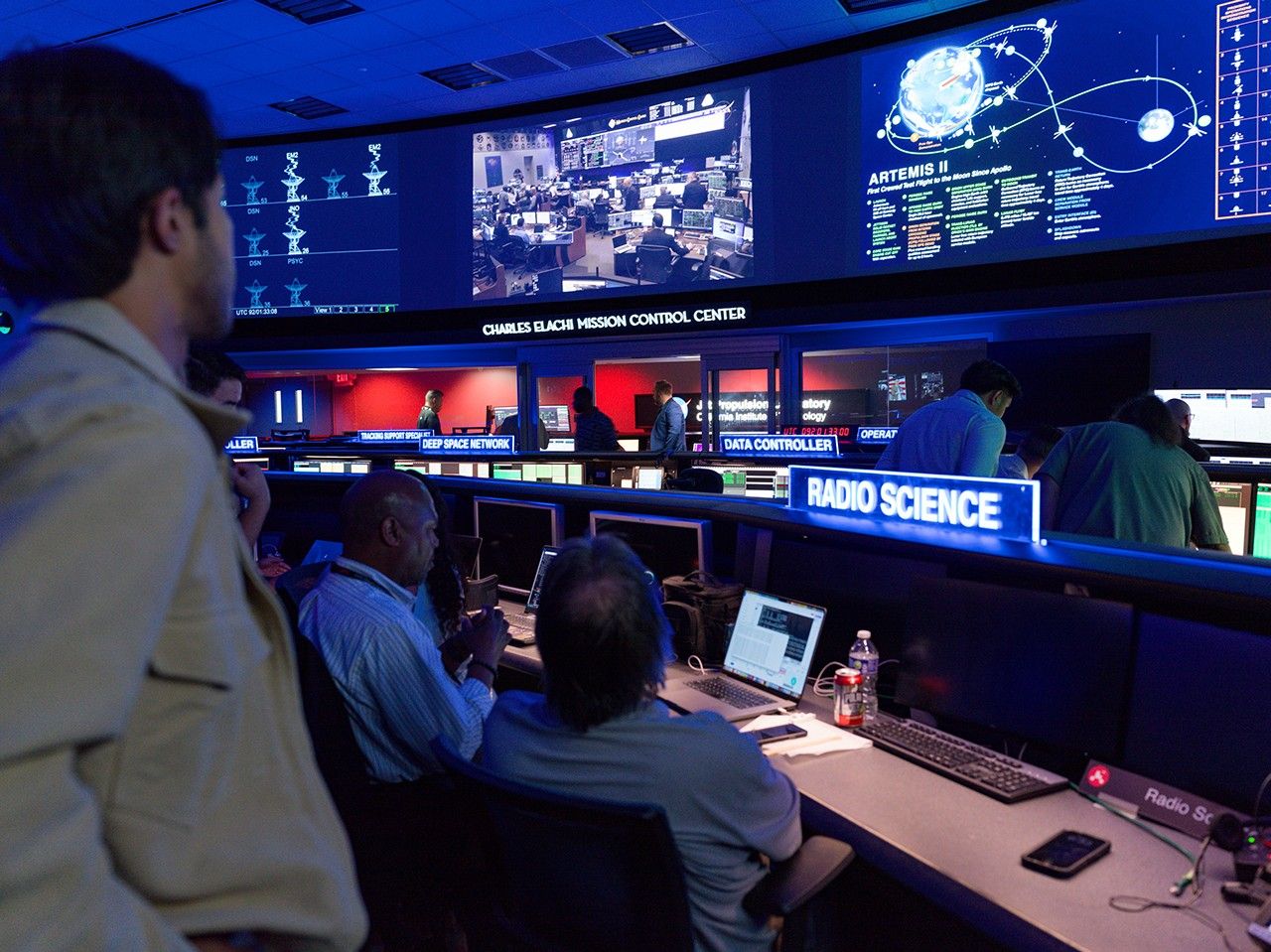
Description Staff at NASA’s Jet Propulsion Laboratory in Southern California watch the agency’s Artemis II mission unfold soon after launch on April 1, 2026, at the Space Flight Operations Facility, which operates the Deep Space Network (D…
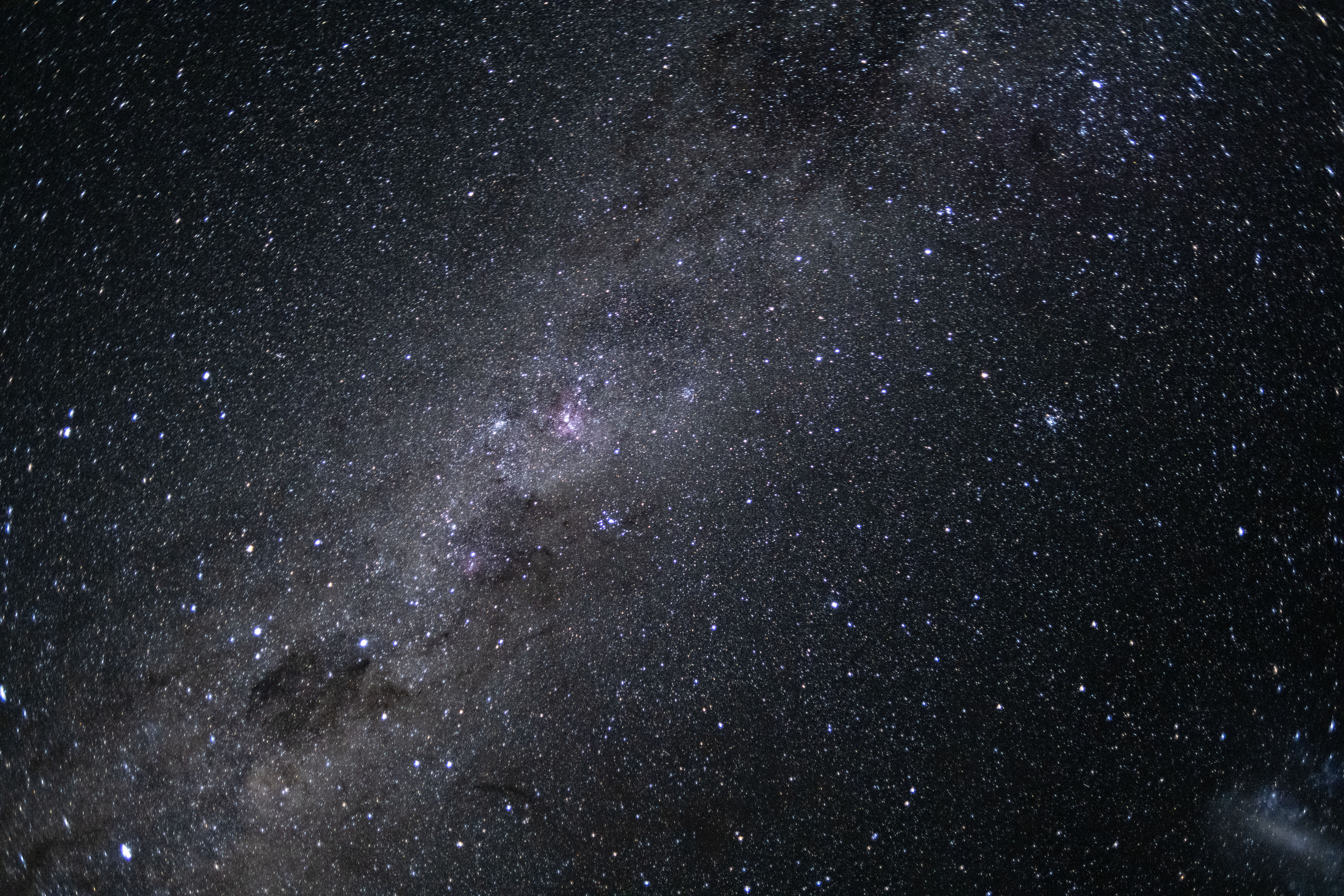
The Artemis II crew captured this photo of our galaxy, the Milky Way, on April 7, 2026. The Milky Way’s elegant spiral structure is dominated by just two arms wrapping off the ends of a central bar of stars. Spanning more than 100,000 ligh…

The crew of Artemis II is busy configuring the Orion capsule for reentry tomorrow, with splashdown off the coast of San Diego at 8:07 pm ET. NASA Associate Administrator Amit […]
A batch of 5 Low Earth Orbit communication satellites for the Chinese state owned SatNet constellation operated by the China Satellite Network Group.…
18 Low Earth Orbit communication satellites with Ku, Q and V band payloads for the G60 constellation operated by Shanghai Spacesail Technologies with…
STP-S29A is a mission under the U.S. Department of Defense's Space Test Program (STP) that will deliver technology demonstrations to orbit and contri…
A batch of 25 satellites for the Starlink mega-constellation - SpaceX's project for space-based Internet communication system.
Amazon Leo, formerly known as Project Kuiper, is a mega constellation of satellites in Low Earth Orbit that will offer broadband internet access, thi…
Note: Payload identity uncertain. Meridian is a series of communications satellite for military and civilian use.
First test launch of Space Pioneer’s Tianlong-3 rocket.
A batch of 29 satellites for the Starlink mega-constellation - SpaceX's project for space-based Internet communication system.
Artemis II is the first crewed mission as part of the Artemis program. Artemis II will send a crew of 4 - 3 Americans and 1 Canadian around the moon …
A batch of 29 satellites for the Starlink mega-constellation - SpaceX's project for space-based Internet communication system.


 View in Flightclub