Florida Launch Schedule
Upcoming launches out of Kennedy Space Center and Cape Canaveral AFB
Filter by Agency, Locations or Vehicles
Show All Launches
Falcon 9 Block 5 | Skynet 6A
SpaceX | United States of AmericaCape Canaveral SFS, FL, USA
TBD December, 2027
Status: To Be Determined
Mission:
The Skynet 6A gap-filler military communications satellite built by Airbus Defence and Space to cover the gap between the Britisch Skynet-5 network and its successor. Skynet 6A was solesourced from Airbus Defence and Space in 2017, but was not fully funded until July 2020. Aibus will build the Skynet-6A satellite in the United Kingdom and arrange a 2025 launch. RAL Space, a U.K. national laboratory, will test the all-electric satellite at its facility in Harwell. Skynet-6A, based on the Eurostar-Neo platform, is expected to provide communications services for the British military until at least 2040.
Geostationary Transfer OrbitFalcon 9 Block 5 | NEO Surveyor
SpaceX | United States of AmericaCape Canaveral SFS, FL, USA
TBD June, 2028
Status: To Be Determined
Mission:
NASA's Near-Earth Object (NEO) Surveyor mission is designed to help advance planetary defense efforts to discover and characterize most of the potentially hazardous asteroids and comets that come within 30 million miles of Earth’s orbit. These are collectively known as near-earth objects, or NEOs. NEO Surveyor consists of a single scientific instrument: a 50 centimeter (nearly 20 inch) diameter telescope that operates in two heat-sensing infrared wavelengths. It will be capable of detecting both bright and dark asteroids, which are the most difficult type to find.
Heliocentric L1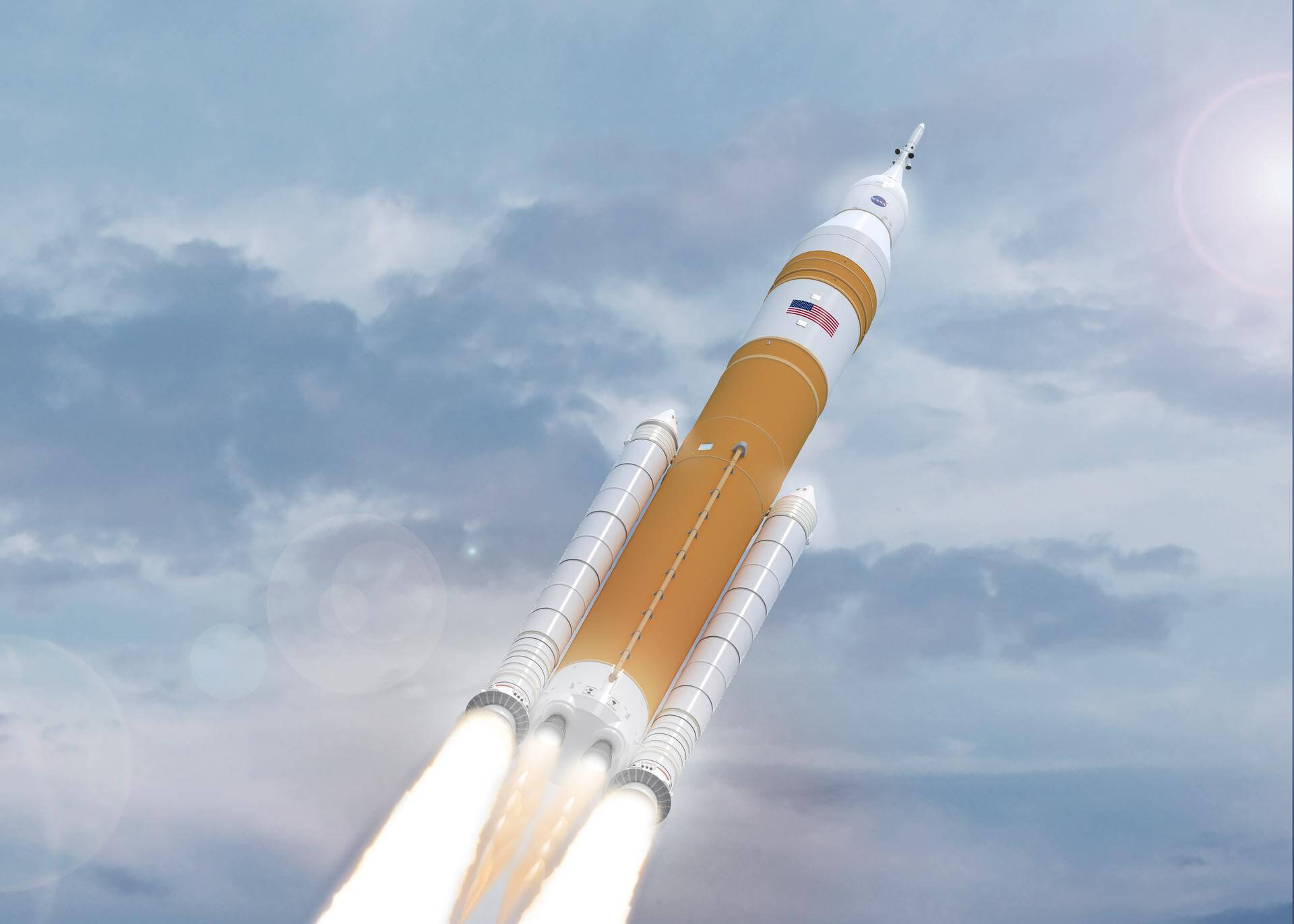
SLS Block 1B | Artemis IV
National Aeronautics and Space Administration | United States of AmericaKennedy Space Center, FL, USA
TBD June, 2028
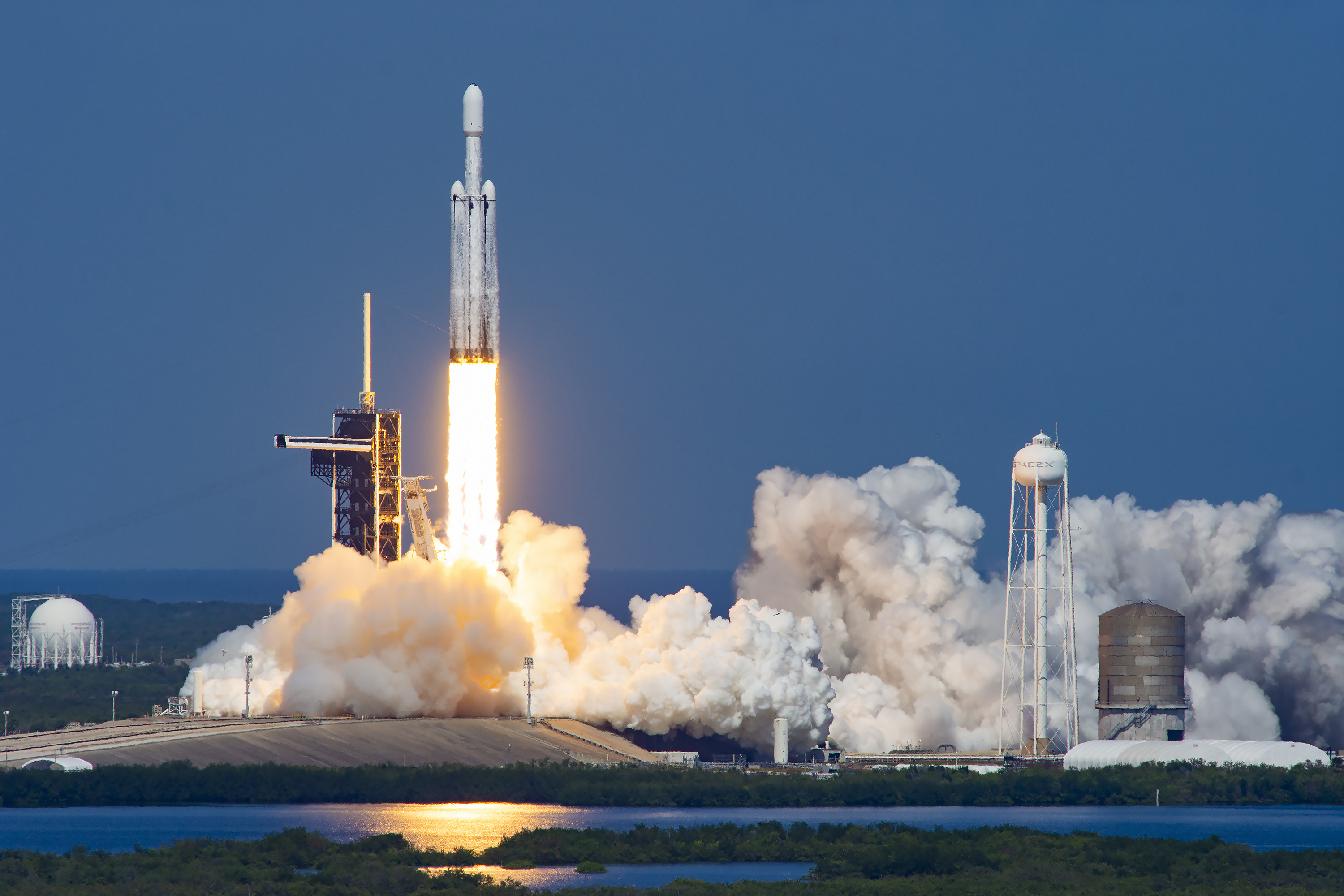
Falcon Heavy | Dragonfly
SpaceX | United States of AmericaKennedy Space Center, FL, USA
TBD July, 2028
Status: To Be Determined
Mission:
Dragonfly is NASA's 4th New Frontiers program mission that will send a robotic rotorcraft to fly within the atmosphere of Saturn's moon Titan to sample materials and determine surface composition in different geologic settings, advancing humanity's search for the building blocks of life. The craft is a large quadcopter with double rotors with mass of about 875 kg, featuring rotors of 1.35 m in diameter. It can fly through several kilometers within an hour and will perform 1 flight per Titan day (~16 Earth days). During the planned 3.3-year mission, Dragonfly is expected to cover distance up to several hundred km. Dragonfly will use a Multi-Mission Radioisotope Thermoelectric Generator (MMRTG) to power its instruments. The planned science instrument suite is: * DragonCam: Camera Suite * DrACO: Drill for Acquisition of Complex Organics * DraMS: Mass Spectrometer * DraGNS: Gamma-ray and Neutron Spectrometer * DraGMet: Geophysics and Meteorology
Heliocentric N/A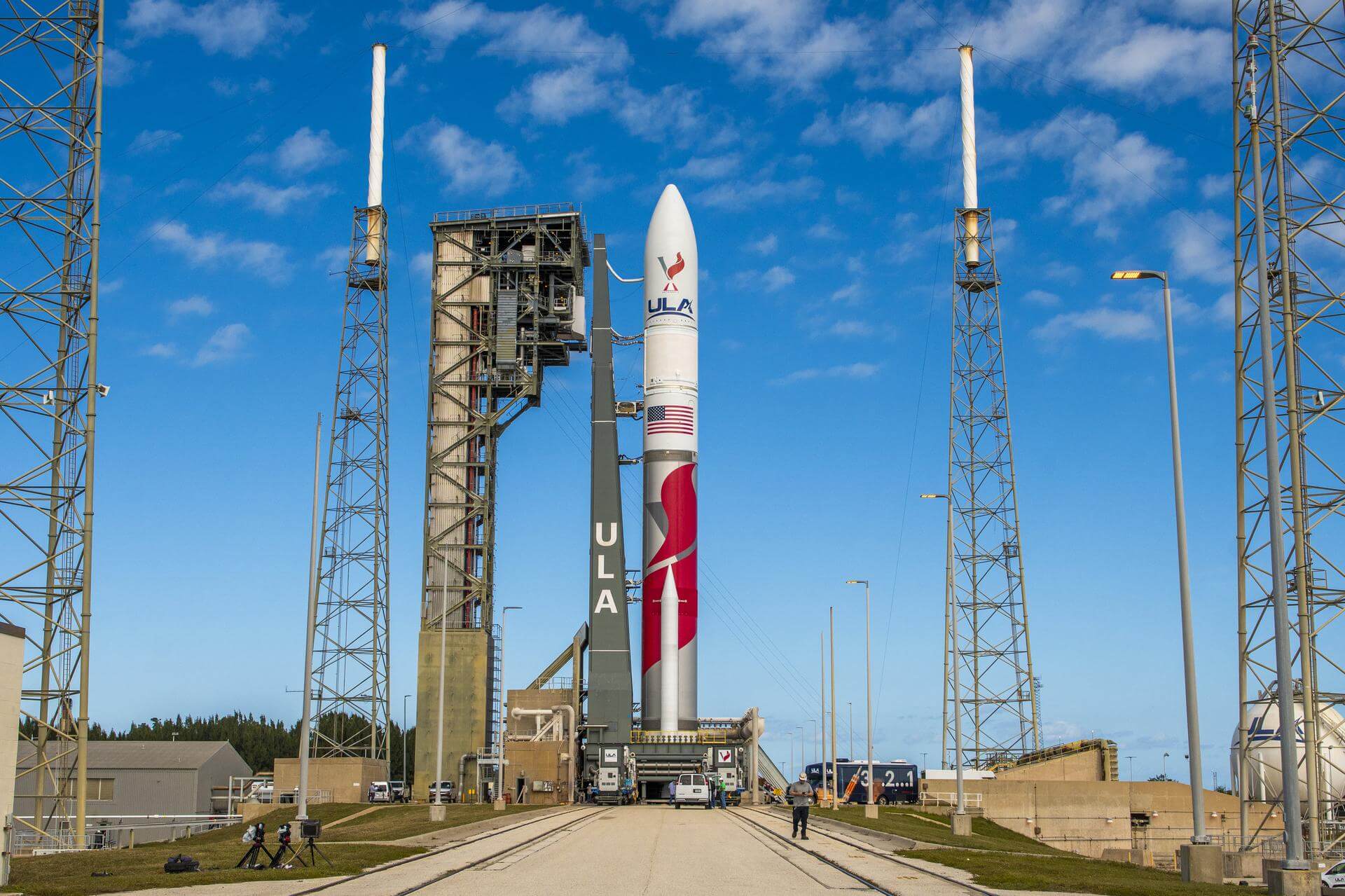
Vulcan | USSF-70
United Launch Alliance | United States of AmericaCape Canaveral SFS, FL, USA
TBD September, 2028

Unknown | ExoMars 2028 Rosalind Franklin rover
Unknown | UnknownCape Canaveral SFS, FL, USA
TBD October, 2028
Status: To Be Determined
Mission:
ExoMars 2028 is a second mission of two-part European Space Agency astrobiology project to search for evidence of life on Mars. The primary objective is to land the rover at a site with high potential for finding well-preserved organic material, particularly from the very early history of the planet. The rover is expected to travel several kilometers during its mission. The European rover will be the first mission to combine the capability to move across the surface and to study Mars at depth. It will collect samples with a drill down to a depth of 2 m and analyze them with next-generation instruments in an onboard laboratory. Underground samples are more likely to include biomarkers, since the tenuous martian atmosphere offers little protection from radiation and photochemistry at the surface.
Heliocentric N/A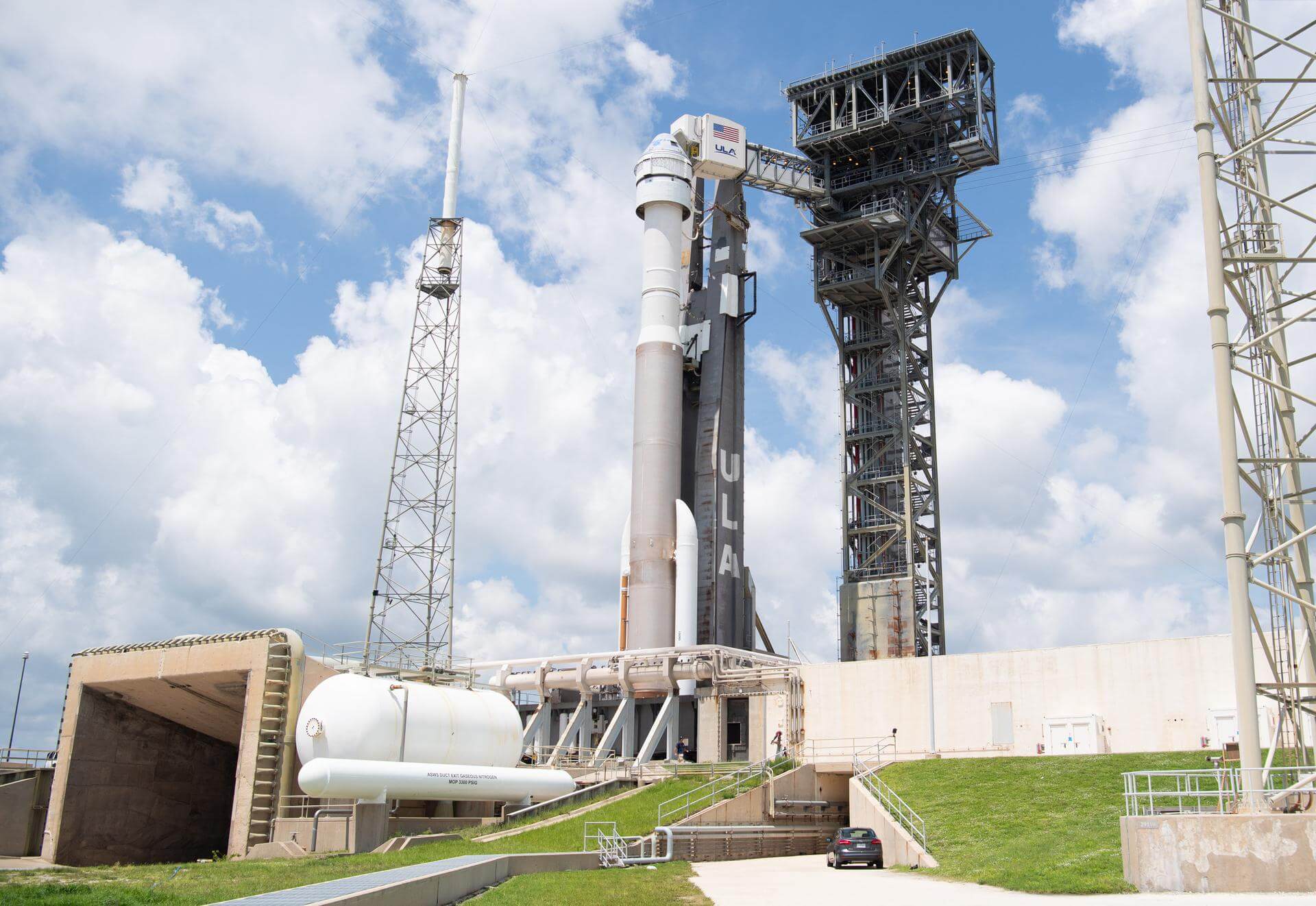
Atlas V N22 | Starliner-6
United Launch Alliance | United States of AmericaCape Canaveral SFS, FL, USA
TBD December, 2028
Falcon 9 Block 5 | EchoStar 26
SpaceX | United States of AmericaCape Canaveral SFS, FL, USA
TBD December, 2028
Status: To Be Determined
Mission:
EchoStar 26 is a direct broadcast satellite, built on the proven Maxar 1300 series platform, which will deliver content across DISH TV customers across all 50 U.S. states & Puerto Rico. It will be equipped with a high-power, multi-spot beam payload, allowing DISH to provide high-quality content to its customers.
Geostationary Transfer OrbitFalcon 9 Block 5 | SEOPS Rideshare Mission
SpaceX | United States of AmericaCape Canaveral SFS, FL, USA
TBD December, 2028
Falcon 9 Block 5 | JSAT-31
SpaceX | United States of AmericaCape Canaveral SFS, FL, USA
TBD December, 2028
Status: To Be Determined
Mission:
JSAT-31 is a geostationary communication satellite for SKY Perfect JSAT. Operating both in Ka and Ku frequency bands, the JSAT-31 High Throughput Satellite will offer high speed broadband services over Japan, South-East Asia, Australia, New Zealand and Pacific islands. JSAT-31 will have the largest capacity in the history of SKY Perfect JSAT satellites. It will rely on Space INSPIRE, a highly flexible and fully software-defined solution that offers instant in-orbit adjustment to broadband connectivity demand, while maximizing the effective use of the satellite resources. SKY Perfect JSAT will leverage the satellite’s extreme flexibility to offer enhanced communications services all along JSAT-31’s lifespan in orbit.
Geostationary Transfer OrbitFalcon 9
Starlink Group 17-35
Space Launch Complex 4E - Vandenberg SFB, CA, USAA batch of 25 satellites for the Starlink mega-constellation - SpaceX's project for space-based Internet communication system.
Atlas V 551
Amazon Leo (LA-05)
Space Launch Complex 41 - Cape Canaveral SFS, FL, USAAmazon Leo, formerly known as Project Kuiper, is a mega constellation of satellites in Low Earth Orbit that will offer broadband internet access, thi…
Soyuz 2.1a/Fregat-M
Meridian-M No.21L
43/3 (43L) - Plesetsk Cosmodrome, Russian FederationNote: Payload identity uncertain. Meridian is a series of communications satellite for military and civilian use.
Tianlong-3
Demo Flight
Tianlong-3 Launch Pad - Jiuquan Satellite Launch Center, People's Republic of ChinaFirst test launch of Space Pioneer’s Tianlong-3 rocket.
Falcon 9
Starlink Group 10-58
Space Launch Complex 40 - Cape Canaveral SFS, FL, USAA batch of 29 satellites for the Starlink mega-constellation - SpaceX's project for space-based Internet communication system.
Space Launch System (SLS)
Artemis II
Launch Complex 39B - Kennedy Space Center, FL, USAArtemis II is the first crewed mission as part of the Artemis program. Artemis II will send a crew of 4 - 3 Americans and 1 Canadian around the moon …
Falcon 9
Starlink Group 10-44
Space Launch Complex 40 - Cape Canaveral SFS, FL, USAA batch of 29 satellites for the Starlink mega-constellation - SpaceX's project for space-based Internet communication system.
Falcon 9
Transporter 16 (Dedicated SSO Rideshare)
Space Launch Complex 4E - Vandenberg SFB, CA, USADedicated rideshare flight to a sun-synchronous orbit with dozens of small microsatellites and nanosatellites for commercial and government customers.
Kinetica 2
Demo Flight (Qingzhou Prototype Spacecraft)
Launch Area 140 - Jiuquan Satellite Launch Center, People's Republic of ChinaFirst test launch and mission of CAS Space’s Kinetica-2 rocket, with 3 spacecraft on board: * New March 02 (Qingzhou space station cargo resupply …
Electron
Daughter Of The Stars (LEO-PNT Pathfinder A)
Rocket Lab Launch Complex 1A - Rocket Lab Launch Complex 1, Mahia Peninsula, New ZealandThe European Space Agency (ESA)'s LEO-PNT (Low Earth Orbit Positioning, Navigation and Timing) demonstrator mission will feature a 10-satellite const…

